
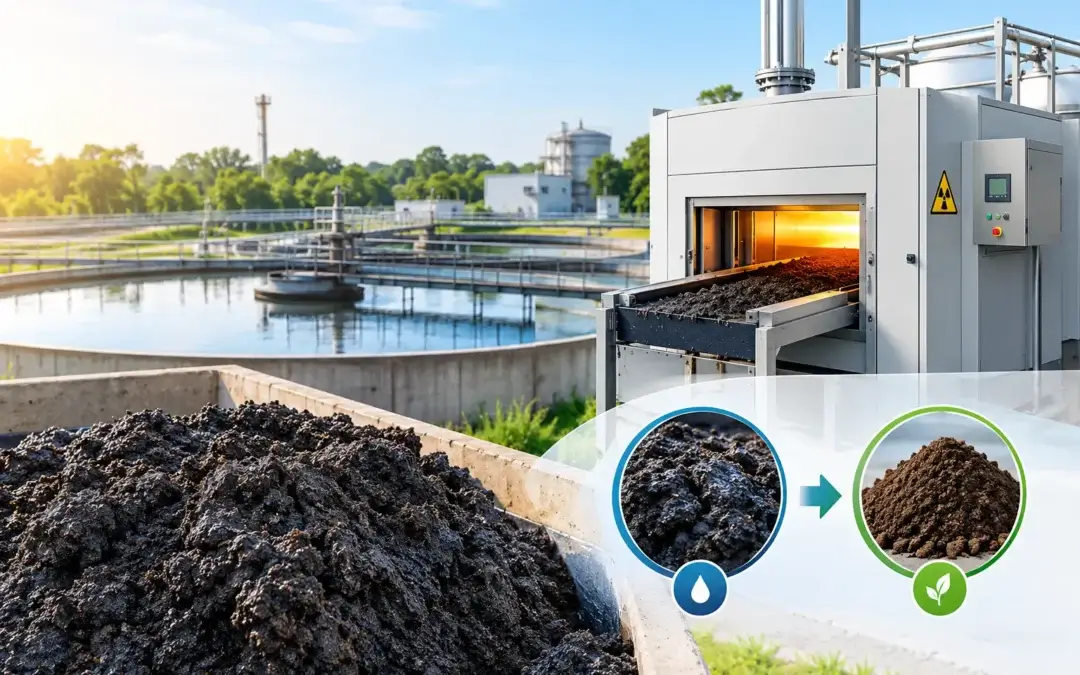
Wastewater treatment plants generate significant quantities of sewage sludge during the treatment of domestic and industrial wastewater. This sludge contains organic matter, moisture and microorganisms, including bacteria, viruses and other potentially harmful pathogens. If it is not treated and managed properly, it can create environmental and public health concerns.
Effective sewage sludge treatment is therefore an important part of responsible wastewater management. Conventional treatment methods help reduce organic matter and microbial contamination, but additional treatment may be required to improve sludge hygiene before disposal or potential reuse. Gamma irradiation is one technology that can support this process by reducing selected harmful microorganisms.
This article explains how sewage sludge irradiation works, its potential benefits and how irradiation technology can contribute to more effective industrial waste management.
Why Is Sewage Sludge Treatment Important?
Sewage sludge is generated during primary and secondary wastewater treatment. It contains suspended solids, organic materials and microorganisms separated from wastewater. Depending on its source and treatment history, it may also contain chemical residues, heavy metals and other contaminants.
Without appropriate treatment, untreated sludge can create several challenges:
- Pathogen exposure: Harmful microorganisms may pose health risks to workers and surrounding communities.
- Environmental contamination: Improper handling or disposal can contribute to soil and water pollution.
- Odour concerns: Organic matter in untreated sludge can produce unpleasant odours during storage and handling.
- Disposal challenges: Sludge requires appropriate processing, transportation and disposal arrangements.
A suitable sewage sludge management strategy helps minimise these risks and supports compliance with applicable environmental requirements. Treatment methods should be selected according to sludge composition, the intended disposal or reuse method and relevant regulations.
How Does Sewage Sludge Irradiation Work?
Sewage sludge irradiation uses ionising radiation to reduce the number of harmful microorganisms present in sludge. The process exposes the material to a controlled radiation dose, which can damage the genetic material of microorganisms and prevent them from reproducing.
Gamma rays are one form of ionising radiation used in industrial irradiation applications. In a sewage sludge treatment application, the process involves preparing and transporting the material through a controlled irradiation system. The radiation source delivers a specified dose based on the material’s characteristics and the required microbial reduction.
The effectiveness of gamma irradiation depends on several factors:
- Initial microbial concentration in the sludge
- Moisture content and physical characteristics of the material
- Radiation dose and exposure conditions
- Material movement and exposure uniformity
- Process monitoring and quality control
Careful process design and dose validation are essential to achieve consistent treatment results.
Gamma-based treatment systems use controlled radiation exposure to reduce selected microorganisms in processed materials. The principles behind gamma radiation sterilization are also relevant to understanding how ionising radiation affects microbial activity. However, sewage sludge treatment requires application-specific dose selection and validation because its composition and treatment objectives differ from those of medical products and other materials.
Role of Irradiation Technology in Industrial Sludge Treatment
Wastewater treatment facilities and industrial operations generate sludge with different compositions and treatment requirements. Conventional processes may include digestion, dewatering, drying, composting and chemical treatment. Irradiation can be considered as an additional microbial control step where appropriate.
The use of irradiation technology offers a non-thermal approach to reducing microbial contamination. Unlike heat-based processes, ionising radiation does not depend on raising the entire material to a high temperature to achieve its microbial reduction effect.
In suitable applications, radiation treatment of sewage sludge may support:
- Reduction of selected pathogenic microorganisms
- Improved hygienic quality of treated sludge
- Additional microbial control alongside existing treatment processes
- Better management of sludge intended for further processing or regulated disposal
However, irradiation does not remove heavy metals, toxic chemicals or all other contaminants. It should therefore be considered part of an integrated treatment system rather than a complete replacement for conventional sludge processing.
What Are the Potential Benefits of Gamma Irradiation for Sewage Sludge?
When incorporated into a properly designed treatment system, gamma irradiation can offer several potential advantages for microbial control.
- Pathogen Reduction
Controlled irradiation can reduce selected bacteria, viruses and other microorganisms. This can improve the hygienic quality of sludge and help minimise biological risks during subsequent handling.
- A Non-Thermal Treatment Approach
Gamma irradiation uses ionising radiation rather than relying on high temperatures to achieve microbial reduction. This makes it a potential option for applications where a non-thermal treatment approach is preferred.
- Integration with Existing Treatment Processes
Radiation treatment can be evaluated alongside established methods such as digestion, dewatering and drying. Its suitability depends on the facility’s treatment objectives, sludge characteristics and process requirements.
- Support for Better Waste Management
Reducing the microbial load can support safer handling and further processing. However, treated sludge must still undergo the necessary testing before disposal or reuse, in accordance with applicable environmental standards.
What Should Be Considered Before Implementing Sewage Sludge Irradiation?
Introducing irradiation into a wastewater treatment facility requires careful technical planning. The system must be designed around the volume and physical characteristics of the sludge, the required microbial reduction and the facility’s existing operations.
Some important considerations include:
- Radiation dose selection: The required dose must be established through testing and validation to achieve the intended microbial reduction.
- Material handling: Sludge movement and exposure conditions should support consistent radiation treatment.
- Process monitoring: Dosimetry and routine quality checks help verify that the intended treatment conditions are maintained.
- Radiation safety: Appropriate shielding, access controls, monitoring equipment and operating procedures are essential.
- Regulatory compliance: Treated sludge must meet the applicable requirements for its intended disposal or reuse.
A feasibility assessment can help determine whether irradiation is technically and economically suitable for a particular wastewater treatment application.
How Does a Gamma Irradiation Plant Support Industrial Waste Management?
A gamma irradiation plant uses a controlled radiation source and specialised equipment to treat materials for specific industrial applications. Its design depends on the material being processed, the required treatment dose, processing capacity and safety requirements.
The development of gamma irradiation facilities in India for industrial applications requires attention to processing capacity, radiation safety, material handling and regulatory requirements. A suitable gamma irradiation plant in India must be evaluated according to its intended application and operating conditions.
For sewage sludge applications, an irradiation system would need to account for the sludge’s physical characteristics, material movement and exposure uniformity. It would also require appropriate radiation shielding, safety interlocks, monitoring equipment and process controls.
The selection of a system should be based on a detailed technical assessment rather than assuming that one configuration will suit every type of sludge or treatment facility.
Gamma irradiation can be evaluated as an additional microbial treatment step within a broader wastewater management process. Its effectiveness should be established through application-specific testing and validation.
“Effective sewage sludge treatment is essential for reducing biological risks and improving the management of wastewater by-products. Gamma irradiation offers a potential additional method for reducing harmful microorganisms and supporting more controlled sludge handling. Although it does not eliminate chemical contaminants or replace all conventional treatment processes, it can be evaluated as part of an integrated waste management strategy.
Organisations exploring gamma irradiation services can assess the technology based on their material characteristics, treatment requirements, processing capacity and operational needs. Symec Engineers provides expertise in industrial irradiation systems and gamma irradiation solutions. With appropriate system design, process monitoring and validation, irradiation can contribute to more effective and responsible industrial waste management practices.”